The object on the desk
A display spends years in front of you and in view of everyone who walks into the room. Notes on designing a monitor to be looked at, not only looked through.
Think about the objects on a desk you admire. A lamp, a pen, a pair of speakers, perhaps a watch set down for the evening. Each was chosen. Now think about the largest object on most desks: the display. It is usually the least considered thing in the room.
Looked through, and looked at
A display has two jobs. While it is on, it should disappear, leaving only the picture. While it is off, and that is a large part of its life, it is simply an object, and it should earn its place.
Most displays manage the first job and ignore the second. Ours are designed for both.
The front: one signature
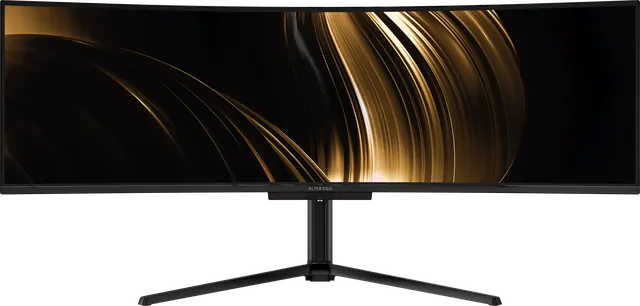
The front of an Alter Ego display carries a single wordmark, printed beneath the panel. There are no badges, stickers or feature logos. When the picture is on, nothing competes with it. When it is off, the front is a calm dark plane in an ink or ivory frame.
The reverse: finished, not hidden
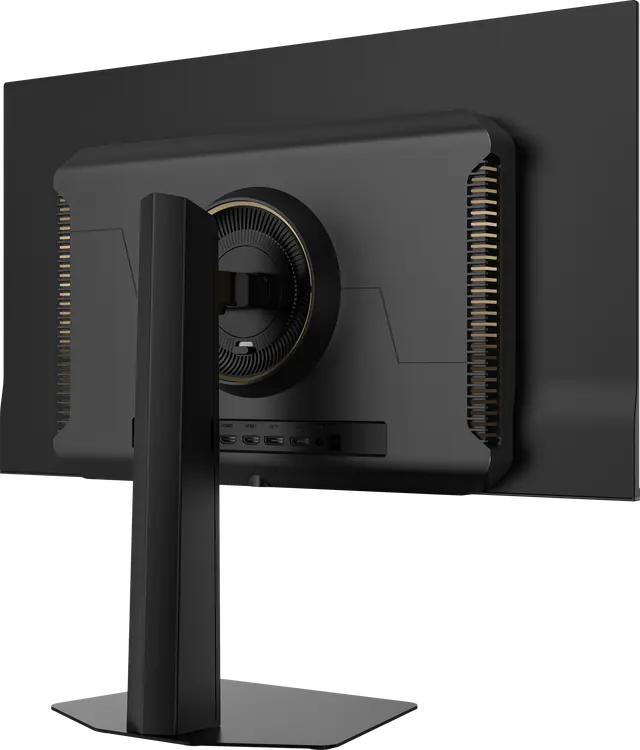
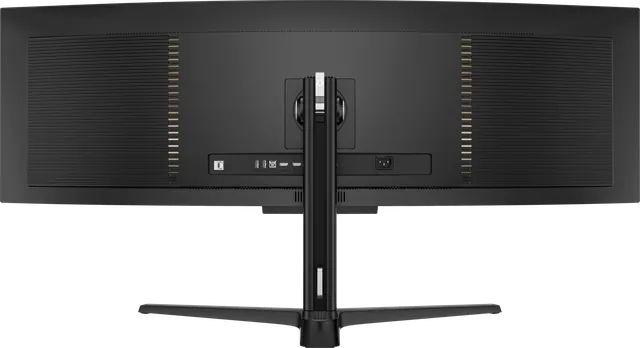
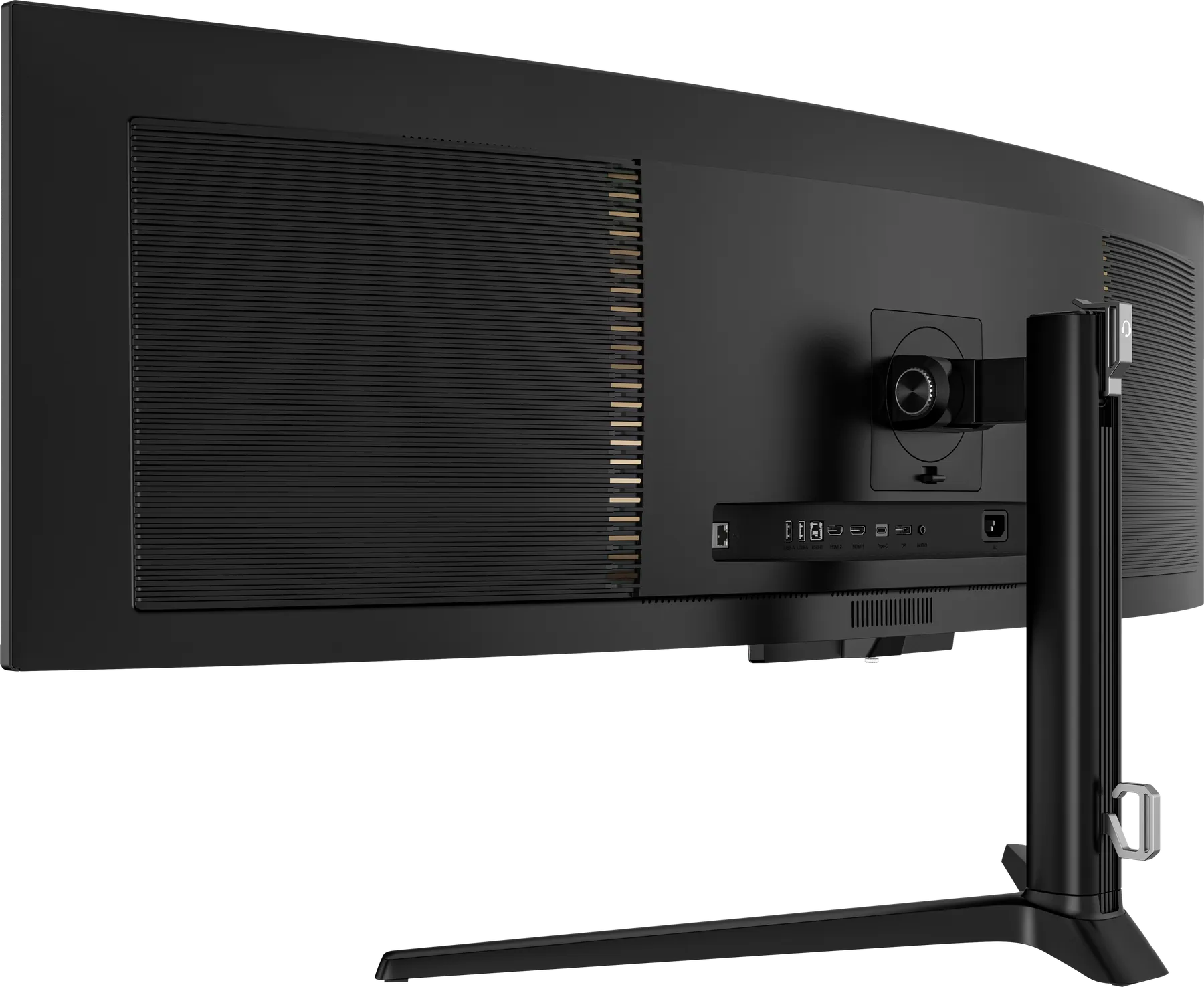
Most rooms see the back of a display more than the front. Visitors walk behind it; a desk faces a window or the middle of a room. We present every reference from behind as carefully as from the front: the ribbed, ventilated reverse of Nocturne 49, the sculpted housing of Solitaire 27, the ivory reverse of Horizon 49 Blanc.
The stand: posture, not decoration
A stand is ergonomics first. It should raise, tilt and turn the panel to where your eyes and neck want it, and then stay put. Our stands offer between 120 and 130 mm of height travel, with tilt and swivel, and Solitaire 27 pivots into portrait.
Two finishes
Ink black suits rooms that go dark at night and keeps attention on the picture. Ivory suits bright studios, pale woods and daylight. Choosing between them.
The horizon
Our monogram is a letter A standing on a horizon, above its reflection. The same horizon runs through everything: the line where panel meets bezel, the plane each display stands on in our photographs, and the line between the person at the desk and the self on the screen.